Booking choice: The small-group Sabrosa day, 9 hours. Book this Tour details
Weather in Porto tells you little about the valley. The mountains of Marão and Montemuro block the Atlantic, so the Douro gets hot, dry summers and very cold winters. In July and August Régua averages about 32 °C by day, against about 24 °C in Porto.
Harvest has moved too. Picking used to start in mid-September. In recent years it often starts in the last week of August, which a leading Port family now calls the new normal.
The quick answer
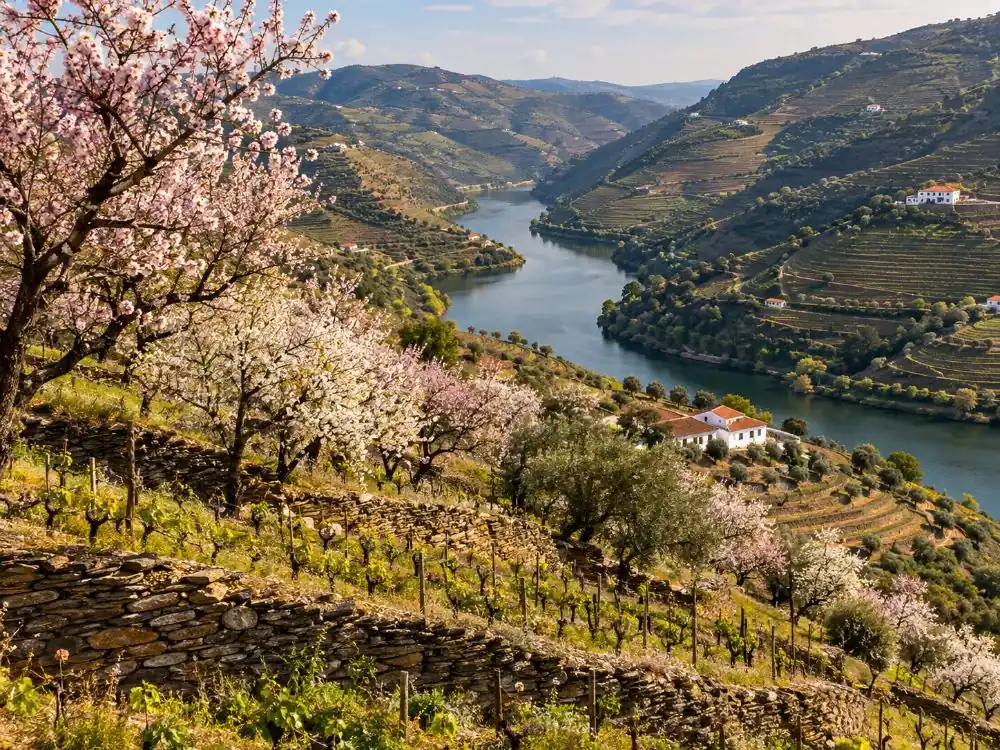
The best time to visit the Douro Valley is mid-September to mid-October, for the harvest, milder days and autumn colour. May and June are the second pick. July and August are hot, with about nine days a month above 35 °C in Régua, so avoid midday walks. Winter is quiet and cold; February and March bring almond blossom in the Douro Superior.
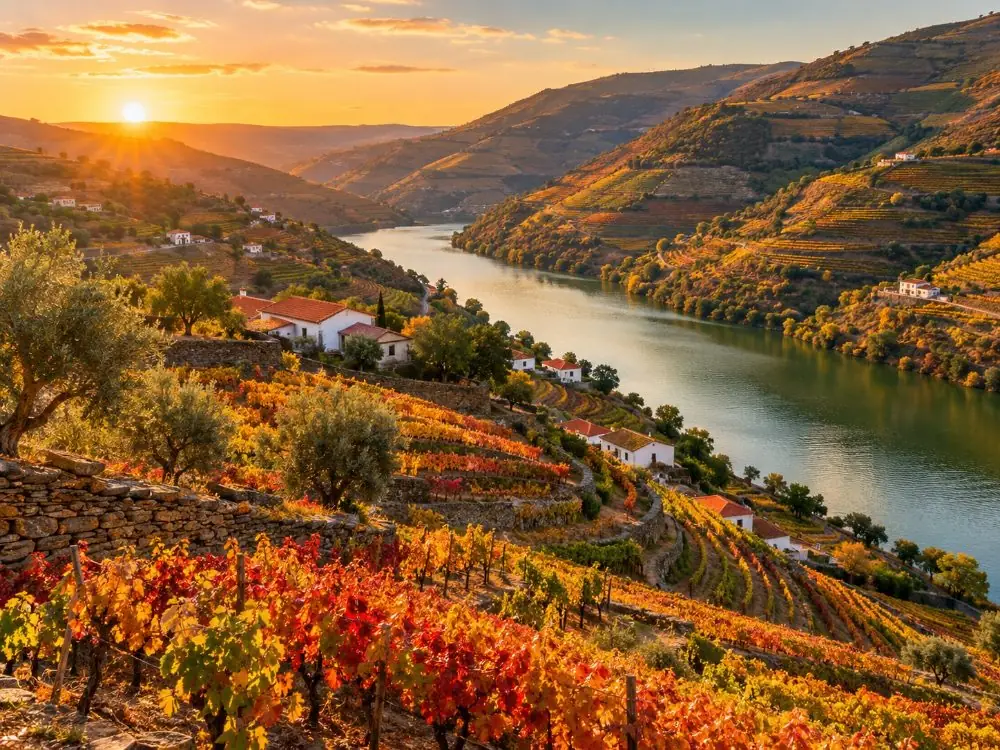
When is the best time to visit the Douro Valley?
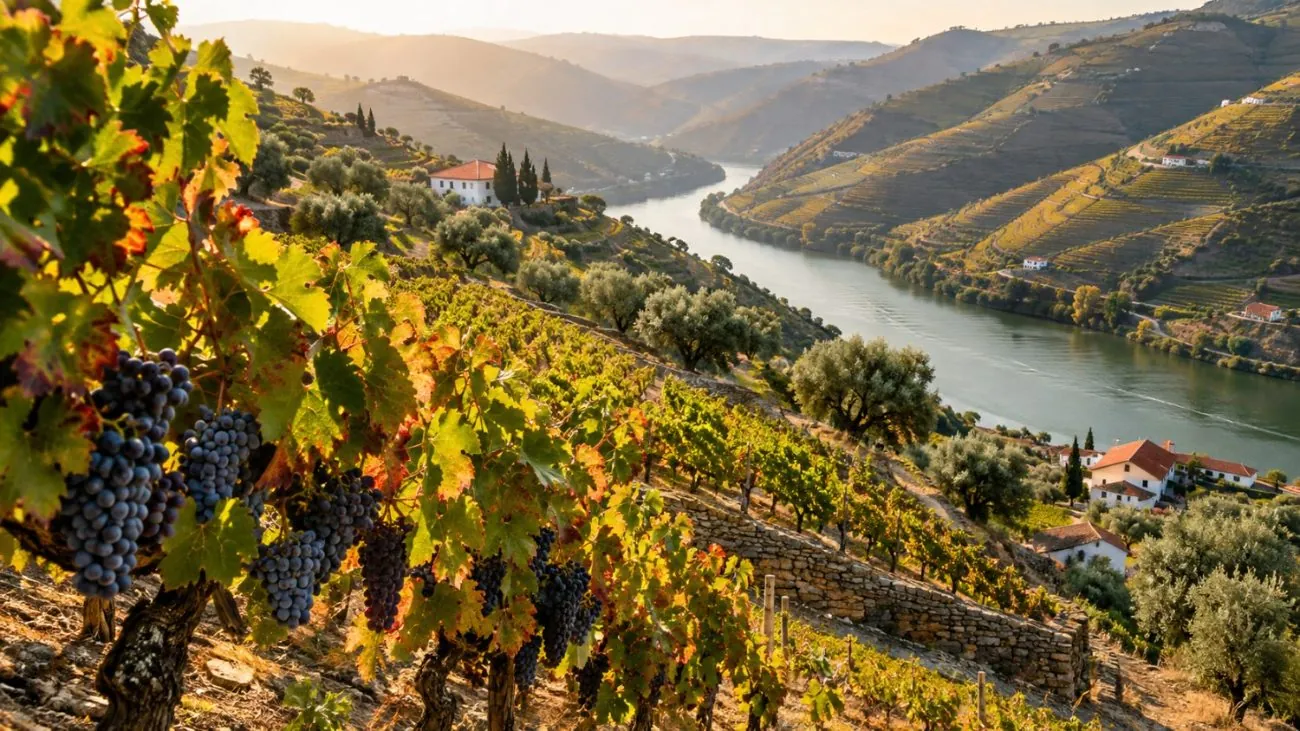
Mid-September to mid-October. The harvest is on or just finishing, days are milder than August, and the vines start turning red.
Spring is the close second. From May the terraces are green, the river is calm and the heat has not set in. June brings long evenings and, in 2026, the start of the historic train season on 6 June.
The hardest months for a vineyard walk are July and August. Tours still run and the boat is lovely, but standing on a terrace at 2 pm in the valley is a test.
Two family wineries and an hour on the river, in a van of 8 or fewer.
Book thisWhat is the Douro Valley like month by month?
Cold and quiet in winter, blossom in late winter, green in spring, very hot in midsummer, harvest from late August, colour in October.
Temperatures are IPMA's 1981 to 2010 normals for Régua, where published:
| Month | In the valley | What is happening |
|---|---|---|
| January | Mean max 12.7 °C, min 4.5 °C | Bare vines, short days, few visitors |
| February to March | Cool | Almond blossom in the Douro Superior |
| April to May | Mild | Vines come into leaf; green terraces |
| June | Mean max 28.7 °C | Historic train from 6 June; São João in Porto on 24 June |
| July | Mean max 31.7 °C | Hottest stretch begins; about 9 days at 35 °C or more |
| August | Mean max 32.1 °C | Harvest can start in the last week |
| September | Hot, easing | Main harvest month |
| October | Milder | Last picking early in the month; autumn colour; historic train ends 18 October |
| November to December | Cold | Quiet; check each quinta's winter hours |
Source: IPMA climate normals. Monthly figures not listed in the normals are left as descriptions.
When is the grape harvest in the Douro?
From late August to early October, with most picking in September. In 2024 the harvest began on 22 August.
Charles Symington writes that his father and grandfather usually began picking in mid-September; now the last week of August is common. In 2024, white Viosinho at altitude went first on 22 August, and Touriga Franca came in during the last week of September (Symington).
For visitors that means a long window. Some quintas have offered foot treading at harvest time; Croft's Quinta da Roêda did, as reported in 2015. Ask the estate before you count on it. This year's dates and what to see are in the 2026 harvest post.
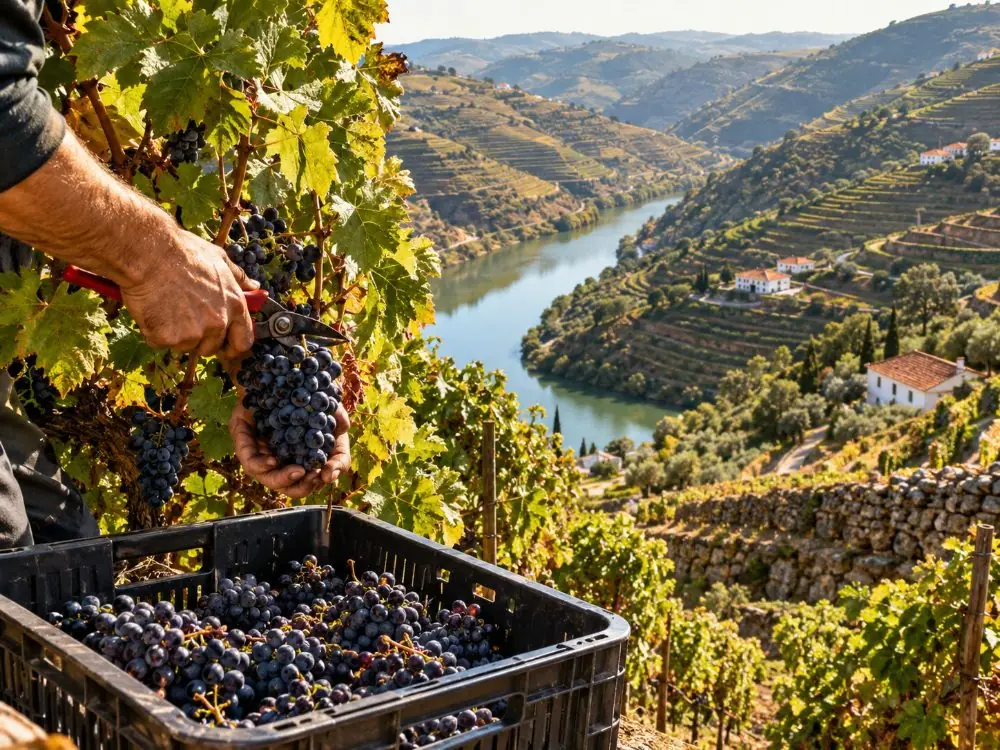
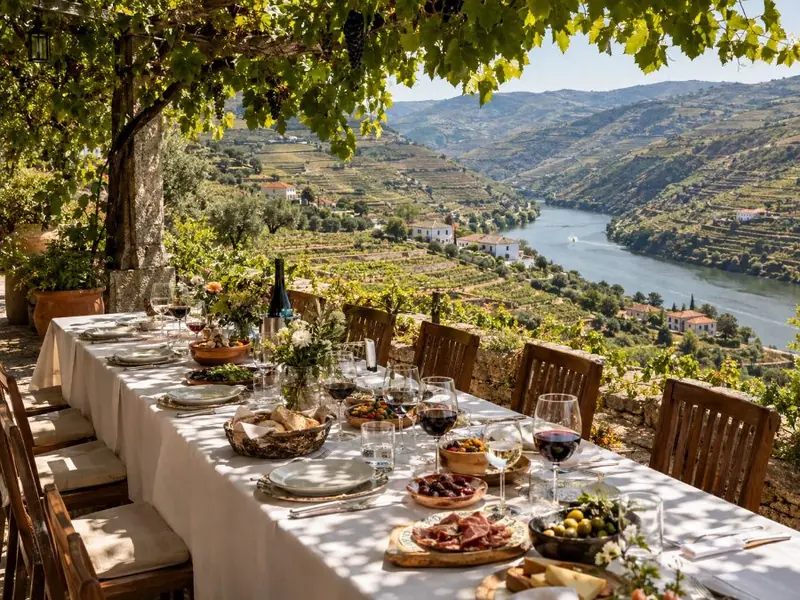
Harvest season with a guide: two family wineries, a chef's lunch and a private boat.
Book this Tour detailsIs the Douro Valley hotter than Porto?
Yes, by a lot in summer. Régua averages about 32 °C by day in July and August, against about 24 °C in Porto.
The figures:
| Régua | Porto (airport) | |
|---|---|---|
| July mean max | 31.7 °C | 24.2 °C |
| August mean max | 32.1 °C | 24.7 °C |
| Days at 35 °C or more | About 25 a year | Not listed |
| Annual rain | 819 mm | 1,140 mm |
Pinhão reached 47.0 °C on 14 July 2022, the highest reading in Portugal that month. In summer, pick a tour with shade at lunch, drink water between tastings and keep the vineyard walk short. The boat is the coolest part of the day.
When should you not visit the Douro Valley?
Avoid midday vineyard walks in July and August, and do not expect a lively valley in December and January.
Midsummer is not a bad time, just a hot one. A day tour spends a lot of time in a van and a cool cellar, which helps. If you are sensitive to heat, July and August are the months to choose the boat-first itinerary and skip the walk.
Deep winter is quiet. No official list shows which quintas close or cut their hours, so check each estate before you go. Porto itself is busiest around São João on 24 June, when the rabelo regatta runs on the river; book Porto beds early if your dates fall there.
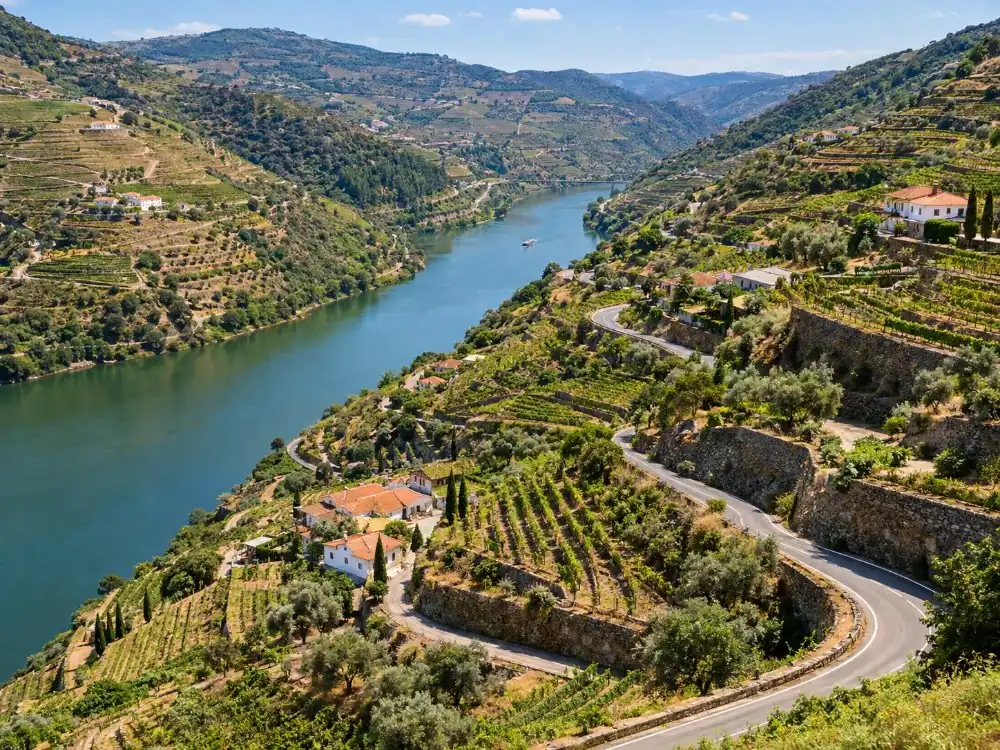
Boat in the late morning, lunch and tastings in cool cellars: the Sabrosa day.
Book thisIs the Douro Valley worth visiting in winter?
Yes, if you like quiet roads and a fire in the tasting room. Days are short and cold, and February and March bring almond blossom.
The January mean minimum at Régua is 4.5 °C. Regular trains on the Douro line run all year, the historic train does not. Almond trees flower between February and March in the Douro Superior, around Torre de Moncorvo, Vila Nova de Foz Côa and Freixo de Espada à Cinta, with fairs along the Almond Tree Route.
What is open from November to March, and how to plan around shorter days: the 2026-27 winter post.
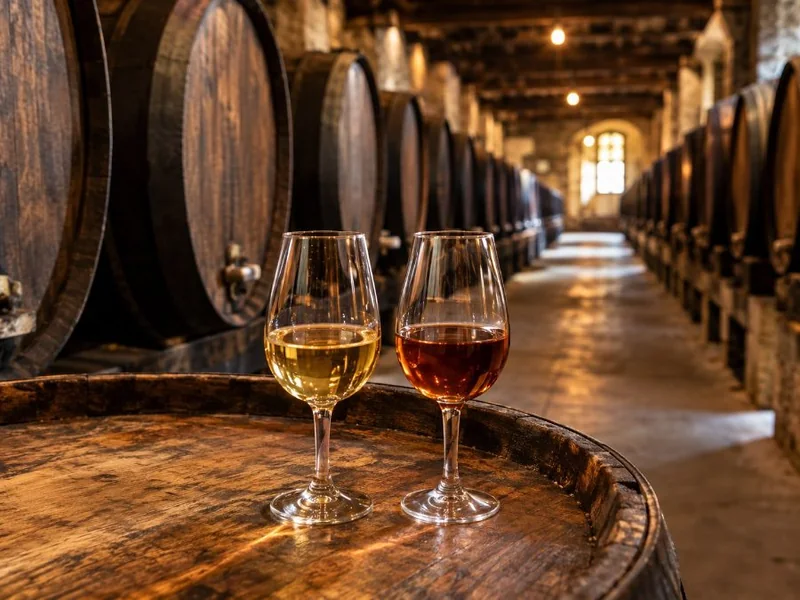
A rainy-day plan in Porto: an hour in the Cálem cellars in Gaia, step-free and under cover.
Book this Tour detailsHow should you dress for a Douro Valley wine tour?
Closed shoes with grip, light layers, a hat and sunscreen. There is no dress code at the quintas.
- Shoes: the terraces are stone and schist, uneven and steep. Trainers or walking shoes, not heels or flip-flops.
- Summer: a hat, sunscreen and a water bottle. The solar boat listing asks for both a sun hat and sunscreen.
- Spring and autumn: a light jacket for the boat and the cellar; cellars are cool year round.
- Winter: warm layers. The valley is colder than Porto at night.
Are jeans fine in Portugal? Yes, in Porto and at the quintas. In the valley in August they are just hot. The 3-3-3 packing rule (three tops, three bottoms, three pairs of shoes) is one way to travel light; it has no official meaning and nothing to do with the Douro.
How far ahead should you book in harvest season?
A few weeks ahead for September weekends and small groups. The train tour's listing says to book well ahead.
Small groups cap at eight per van, which leaves fewer seats per date. The boutique wineries tour needs at least three participants or it is cancelled, which is worth knowing for solo travellers in low season.
Every tour on this site has free cancellation up to 24 hours before, so booking early and moving it later costs nothing.
Free cancellation up to 24 hours before, with a long lunch at a named quinta.
Book thisFrequently asked questions
What is the best month to visit the Douro Valley?
September, for the harvest. Early October and May are close behind, with milder days.
Is August a good time for the Douro?
It is hot, about 32 °C on an average day in Régua. The harvest may start in the last week, and boat trips and cool cellars make it manageable.
Does it rain much in the Douro Valley?
Less than in Porto: about 819 mm a year in Régua against 1,140 mm at Porto airport, and much less further east.
When does the Douro historic train run?
In 2026, from 6 June to 18 October, on Saturdays, Sundays and some Wednesdays. See the train guide.
Ready to book
Choose your day
Free cancellation up to 24 hours before on every option shown here.
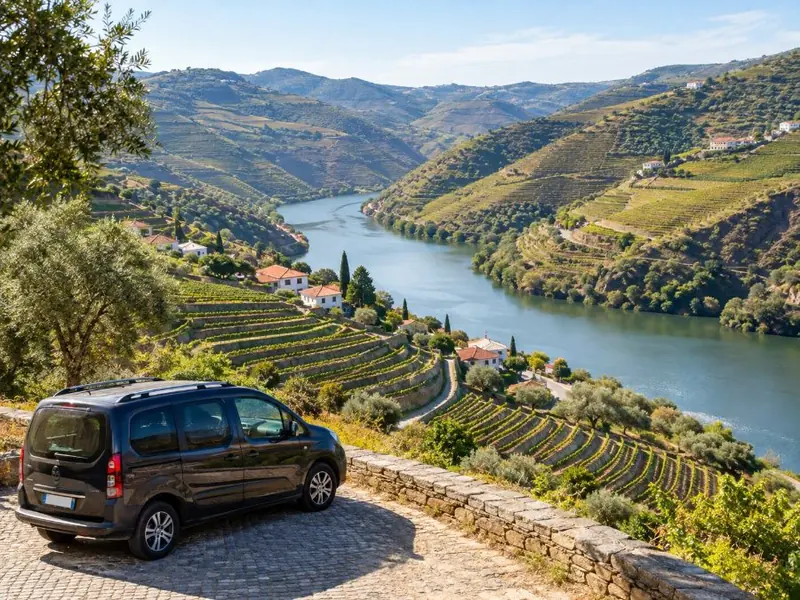
Two Wineries, Lunch & Cruise in a Small Van
Owner-run wineries near Sabrosa and the N222 drive
Two Wine Regions, Farm-to-Table Lunch & Private Boat
- Hotel pickup and drop-off in Porto
- Two family-run wineries, one in each region
- Chef's lunch with wine, vegetarian and gluten-free options
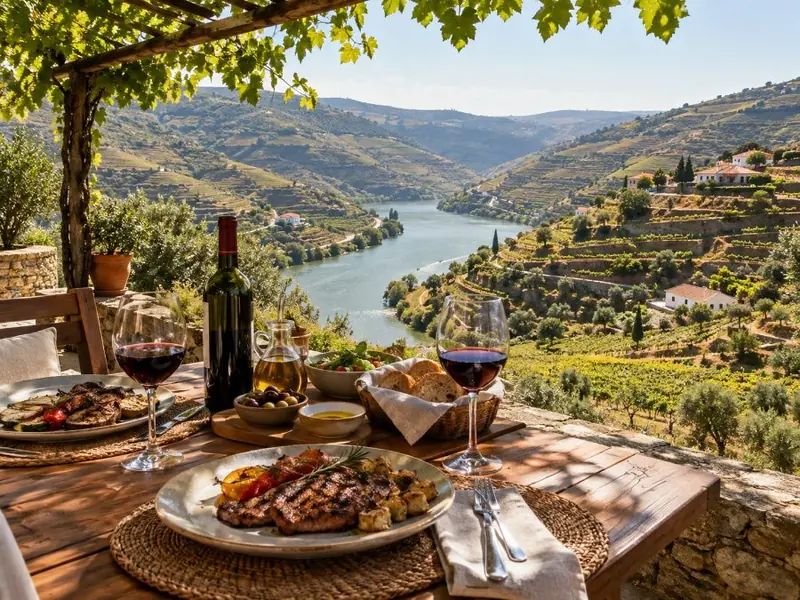
Boutique Wineries, Paired Lunch & Cruise
Two small named quintas, lunch at the second