Booking choice: The Quinta do Bomfim tasting, 1.5 hours. Book this Tour details
Most visitors see the Douro from a day tour, because Porto is where they sleep. That costs 3 to 3.5 hours on the road. Sleep in Pinhão and a boat ride is a five-minute walk; arrive by train and you can leave the car out of it.
The three bases are very different. Pinhão is small and on the river bend. Régua is a working town with a museum and good transport. Lamego is a historic town in the hills, south of the river.
The quick answer
Stay in Pinhão for the river, the walkable quinta and boats, and the train; it is the nicest town in the valley. Pick Régua for the most trains, the Museu do Douro and easy access by road. Pick Lamego for history and the 686-step sanctuary, with a car. Spend at least one night in the valley, two if you want a slow day without a schedule.
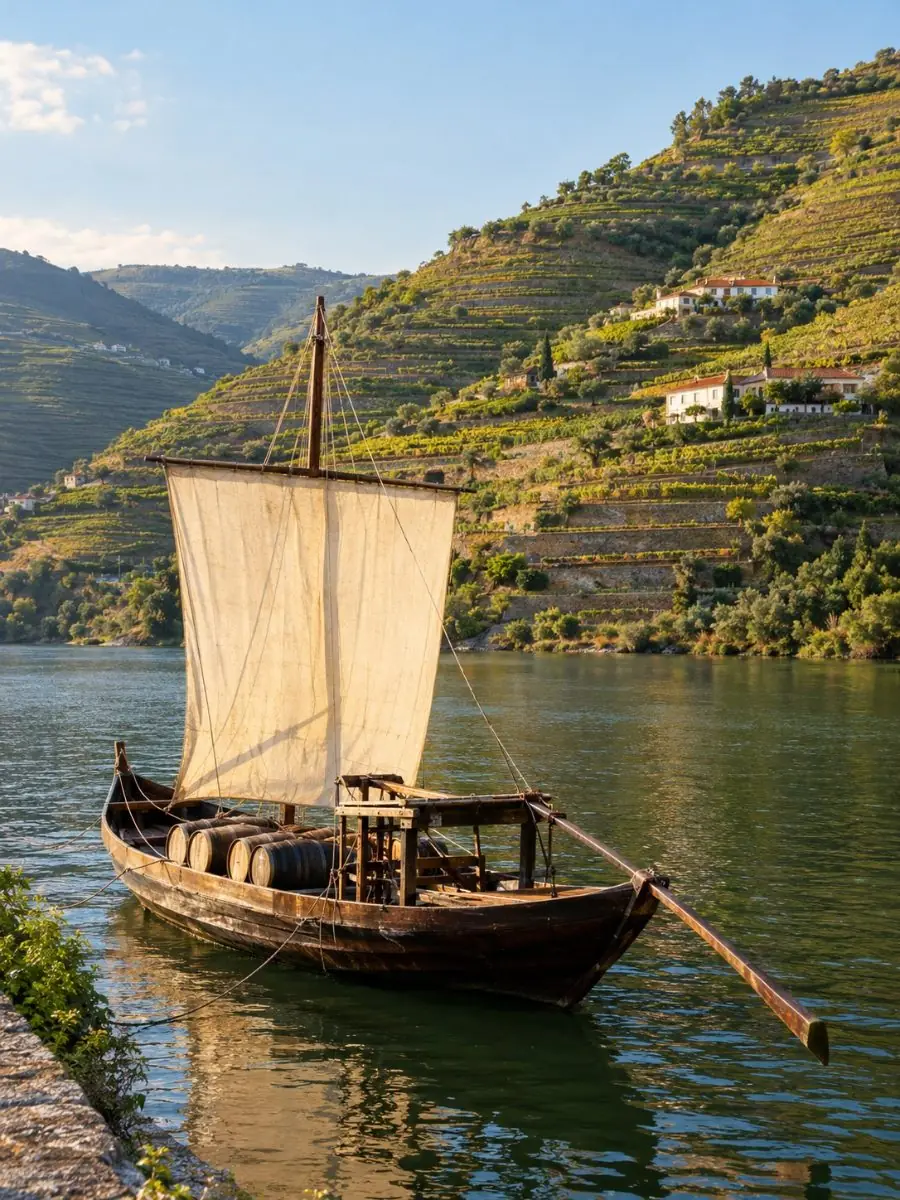
Is it better to stay in Porto or the Douro Valley?
Both, if you can. Porto for the city, at least one night in the valley for the wine. If you only have one day, a tour from Porto is fine.
From Porto, the valley costs you a full day for about five hours of quintas, lunch and the boat. From Pinhão, the same visits take a morning or an afternoon, and the rest of the day is yours. Pinhão is also quieter in the early morning and the evening, once the day tours have headed back to Porto.
The opinion here: a night in Pinhão is the best single upgrade to a Douro trip.
A Port-focused tasting at a Symington quinta, a walk from Pinhão station.
Book thisPinhão, Régua or Lamego: which is the best base?
Pinhão for the river and a car-free stay, Régua for transport and services, Lamego for history.
The three compared:
| Pinhão | Peso da Régua | Lamego | |
|---|---|---|---|
| Setting | Small village on the river bend | Town on the north bank | Hill town south of the river |
| Train from Porto | About 2 h 20 to 2 h 30 | About 2 hours | Not on the line |
| On foot | Boats, Quinta do Bomfim, station tiles | Museu do Douro, riverside | Sanctuary, old centre |
| Car needed | For hillside quintas | For quintas and viewpoints | Yes |
| Sub-region | Cima Corgo | Baixo Corgo | South bank, near Régua |
| Best for | Couples, wine lovers | Practical stays, trains | History, a road trip |
What is Pinhão like?
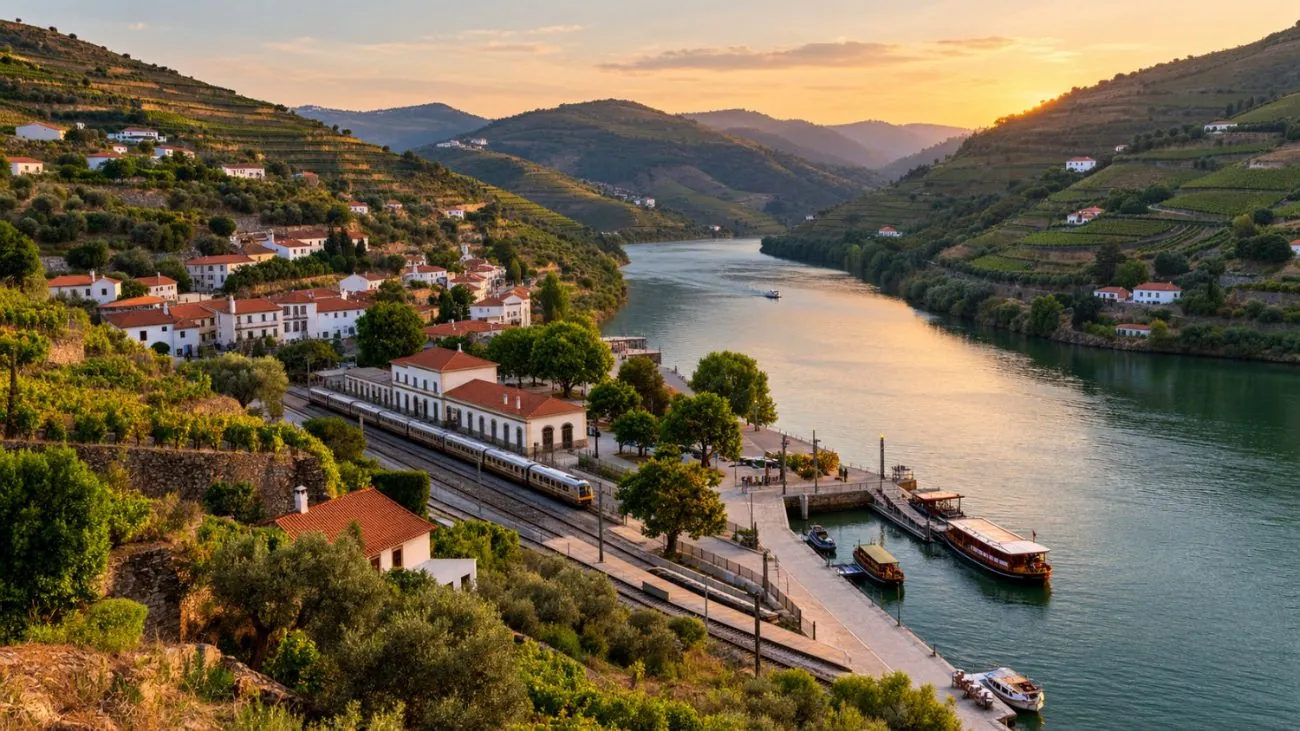
Small, hot in summer and right on the river, where the Pinhão river meets the Douro. It is the heart of the Cima Corgo and of most day tours.
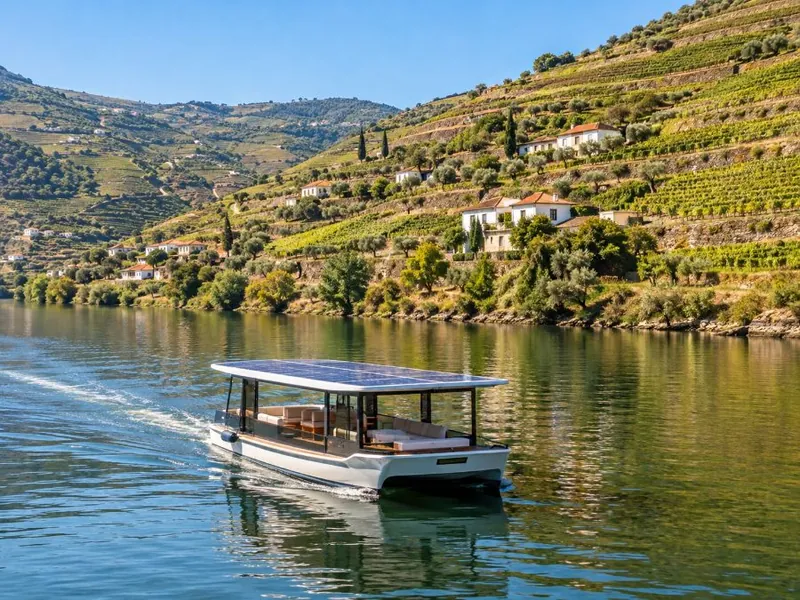
The railway arrived in 1880, and the station's 24 azulejo panels show the harvest and rabelo boats. From the riverfront, the solar boat runs an hour upriver, and Quinta do Bomfim receives visitors at the edge of the village. Above it, the Casal de Loivos viewpoint, about 10 minutes by car, looks down on the S-bend of the river and the quintas around it.
Pinhão is small, so book early for September. In July it gets very hot: the village recorded 47.0 °C in July 2022.
What is Peso da Régua like?
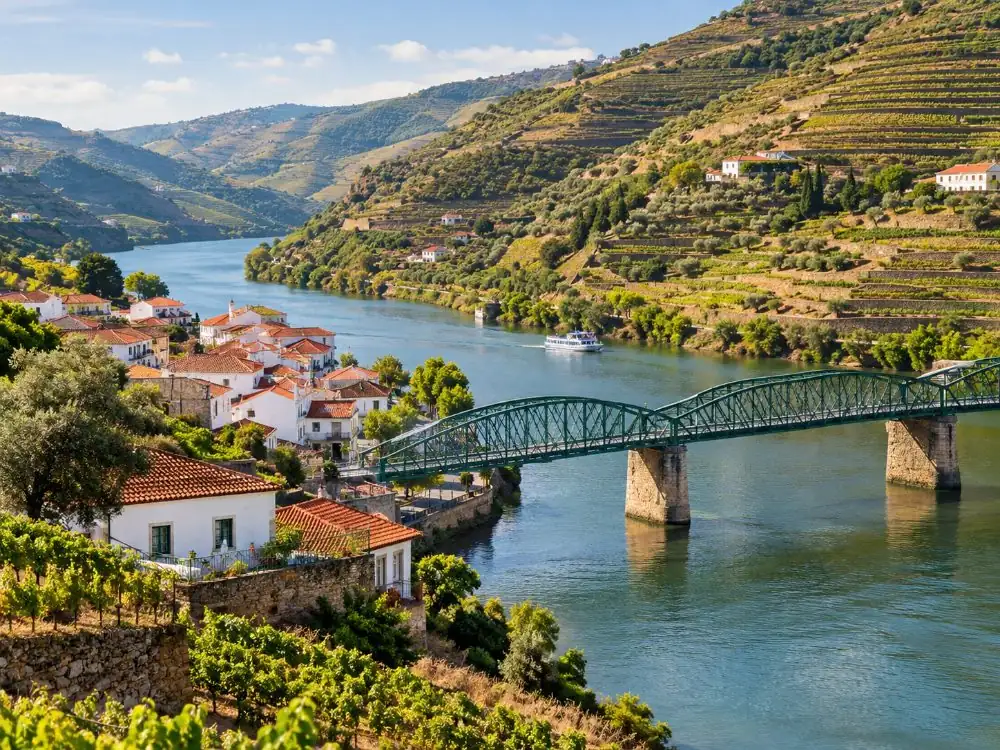
The region's working capital: about 100 km from Porto, with the Museu do Douro, the IVDP's Douro offices and the most trains.
The town grew in the 18th century around Pombal's wine company. Its old headquarters, the Casa da Companhia, now houses the Museu do Douro, with a permanent exhibition on vineyards, rabelos and the harvest, plus a restaurant and wine bar over the river. Régua is where the famous N222 stretch begins and where the historic train departs.
Quinta do Vallado, founded in 1716, sits on the Corgo close to town. For a view, the São Leonardo de Galafura chapel above Régua looks over the valley to the Marão range; the writer Miguel Torga called the scene a geological poem.
What about Lamego?
A historic town south of Régua, known for the Baroque stairway of 686 steps to the Nossa Senhora dos Remédios sanctuary.
Work on the sanctuary began in the mid-18th century and finished in 1905. Lamego is not on the Douro railway, so plan on a car. Quinta da Portela de Baixo, a family estate with a small museum of winemaking tools, is nearby.
Lamego suits a road trip with a day in the town and a day among the quintas. For a first visit focused on wine and the river, Pinhão is the better base.
Where should you stay in the Douro Valley without a car?
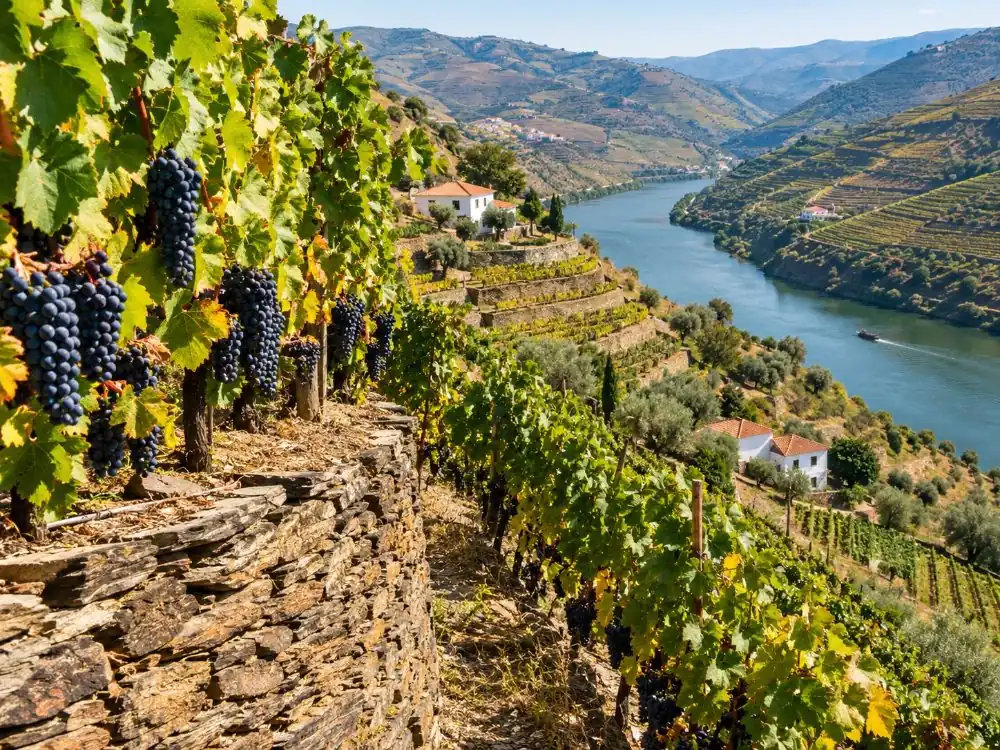
Pinhão. You arrive by train, and the boats, a quinta, restaurants and the station are within a short walk.
Régua works too, with more trains and the museum on foot, but its quintas and viewpoints need a taxi. Wine villages such as Favaios and Provesende, two of the six official Aldeias Vinhateiras, sit on the plateaus above and need a car or a guide.
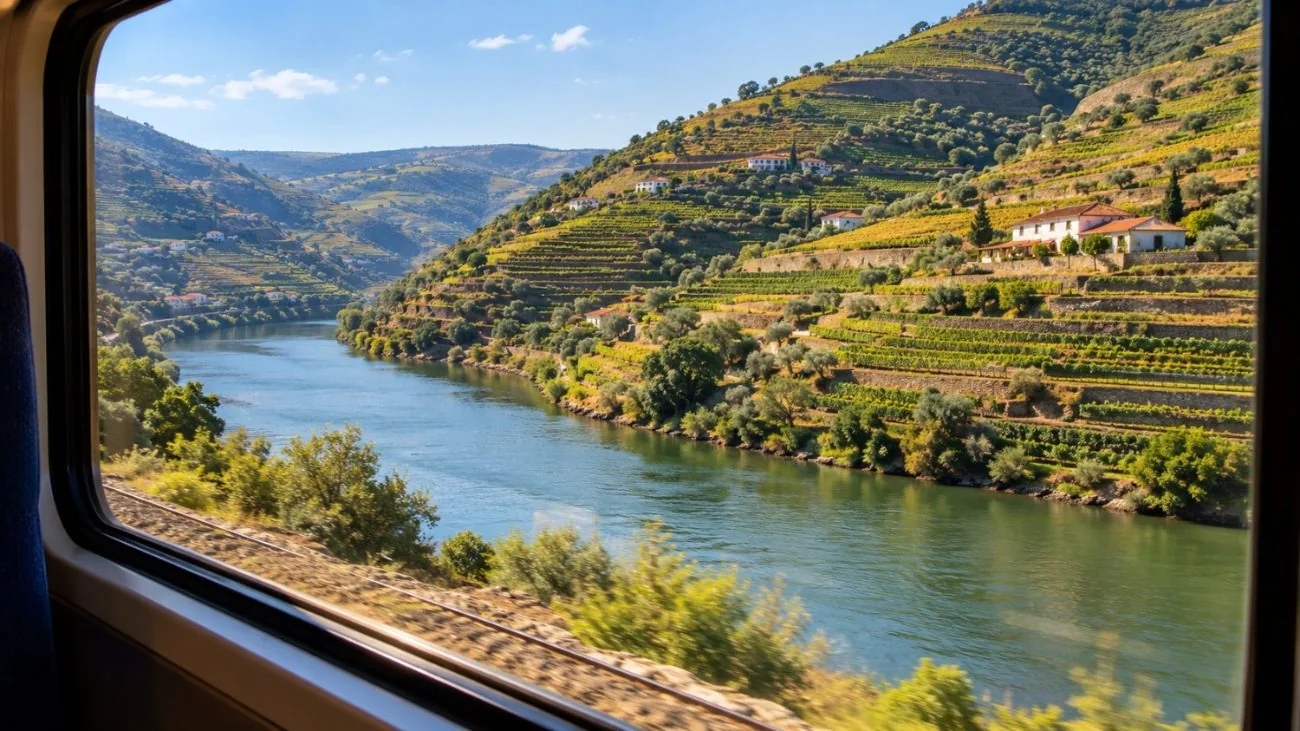
A good car-free plan: the morning train to Pinhão, the Bomfim visit after lunch, the boat in the late afternoon, and a taxi to one hillside estate the next day. The train guide has times and the best side to sit.
No car needed: the solar boat docks are walkable from Pinhão station.
Book thisHow many days do you need in the Douro Valley?
One day for a first taste, two nights for a relaxed visit, three if you also want the Douro Superior.
- One day: a tour from Porto. See the day trip guide.
- Two nights in Pinhão: the train in, two quinta visits, the boat, a viewpoint, a long dinner.
- Three nights or more: add the train east to Pocinho and the Douro Superior, drier and emptier, with almond blossom in February and March.
Opinion: two nights is the sweet spot. It turns the Douro from a schedule into a holiday.
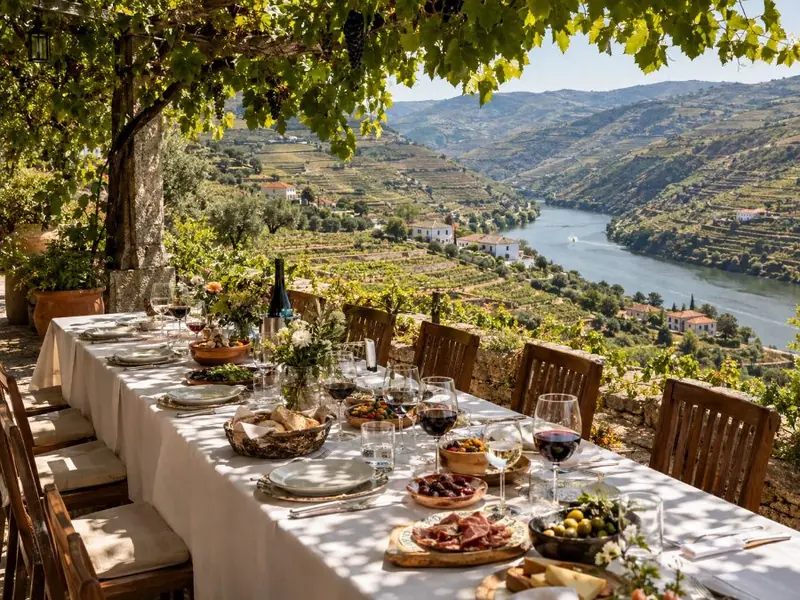
Only one day? Two regions, two family wineries and a private boat, with hotel pickup in Porto.
Book this Tour detailsWhat is the prettiest part of the Douro Valley?
The Cima Corgo around Pinhão, where the river bends between steep terraces. The Douro Superior is wilder and quieter.
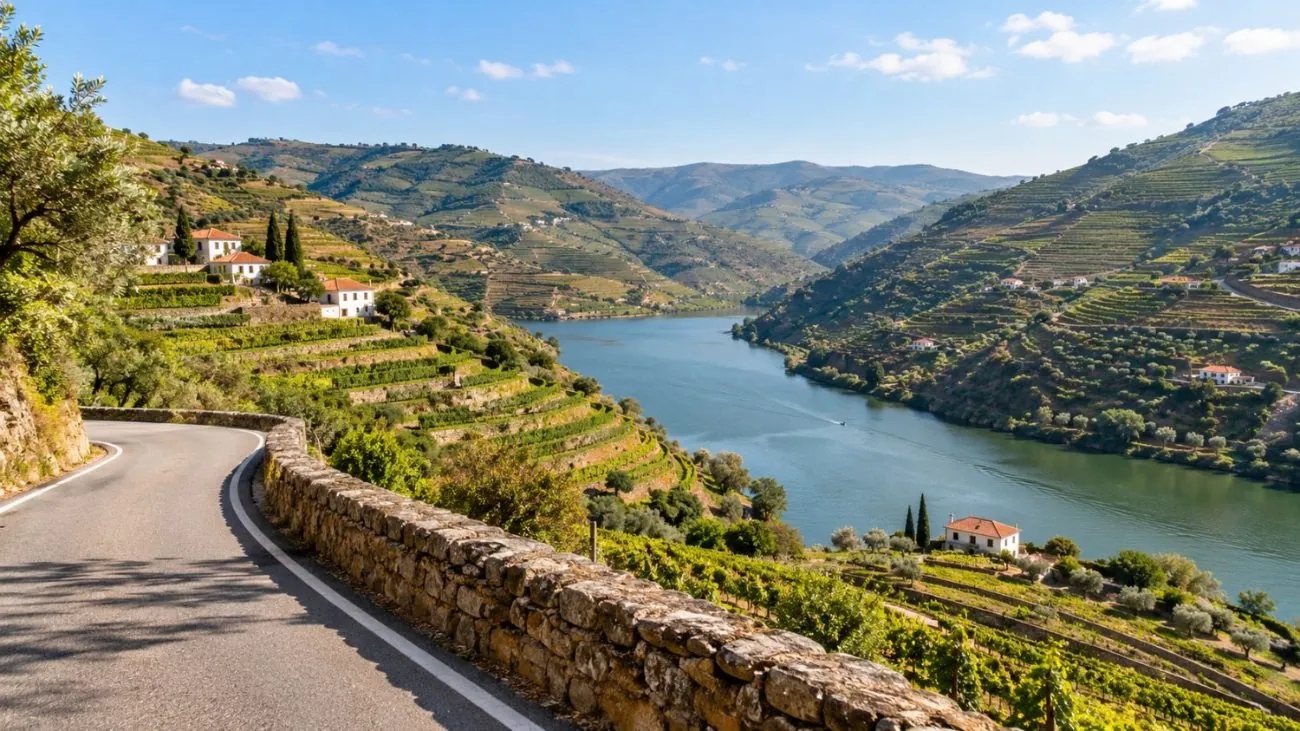
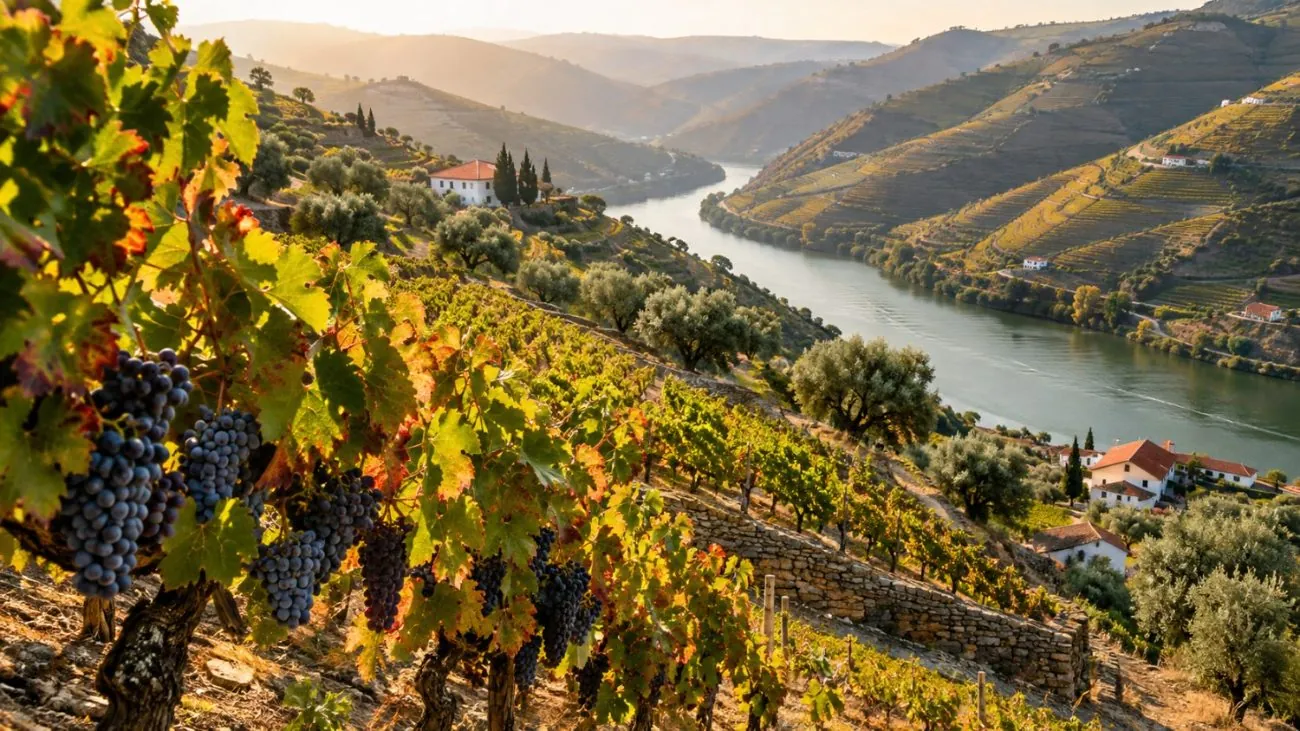
The UNESCO area, about 24,600 hectares, covers a slice of the 250,000-hectare demarcated region. From Casal de Loivos you see Quintas das Carvalhas, Roêda and Foz around the bend. Further east, São Salvador do Mundo looks down on the river above the Valeira dam.
If you want one view, Casal de Loivos at sunset. If you want two, add São Leonardo de Galafura above Régua.
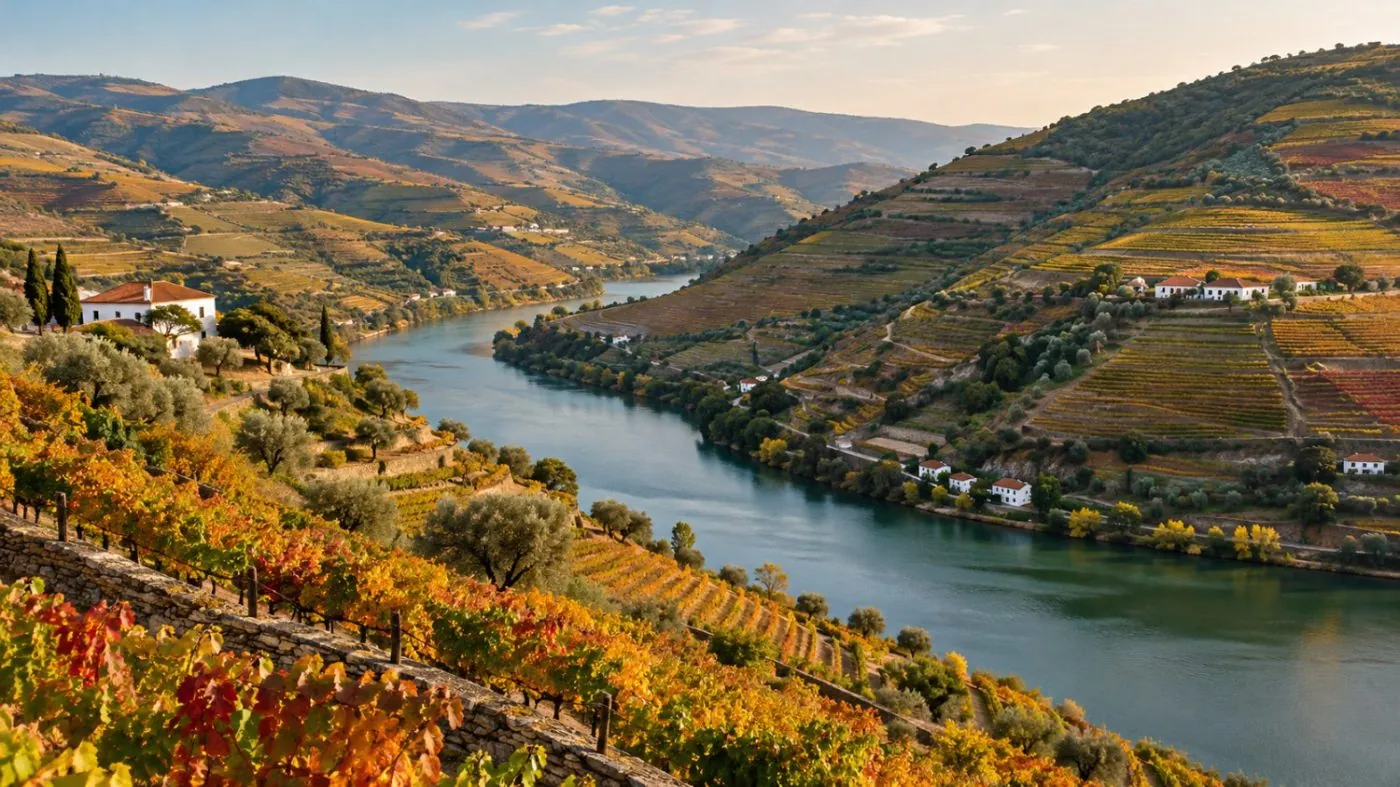
Casal de Loivos and the Pinhão bend, seen from the boat as well as above.
Book thisFrequently asked questions
What is the main town in the Douro Valley?
Peso da Régua is the main town, home to Casa do Douro and IVDP's Douro offices. Pinhão is smaller and more central to the vineyards.
Which city is closest to the Douro Valley?
Porto is the nearest big city, about 100 km from Régua, with the airport and the Douro railway.
Is Pinhão worth staying in?
Yes. It is the best base without a car: the train, the boats and a Symington quinta are within walking distance.
Can you stay at a quinta in the Douro?
Yes. Some estates run guest rooms or wine hotels, such as Quinta do Vallado near Régua.
Ready to book
Choose your day
Free cancellation up to 24 hours before on every option shown here.
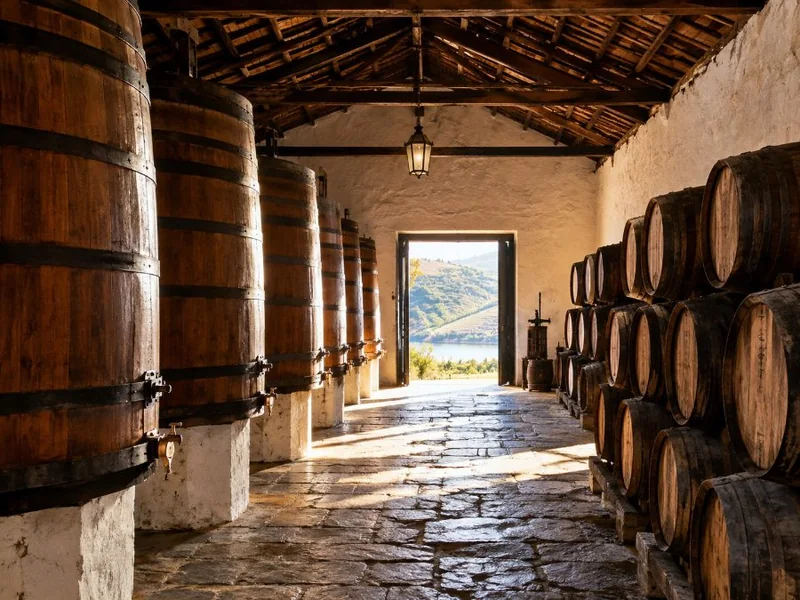
Quinta do Bomfim Visit & Port Tasting
A historic Port estate you can reach by train
Silent Solar Boat with Wine Tasting
For travellers already in the valley
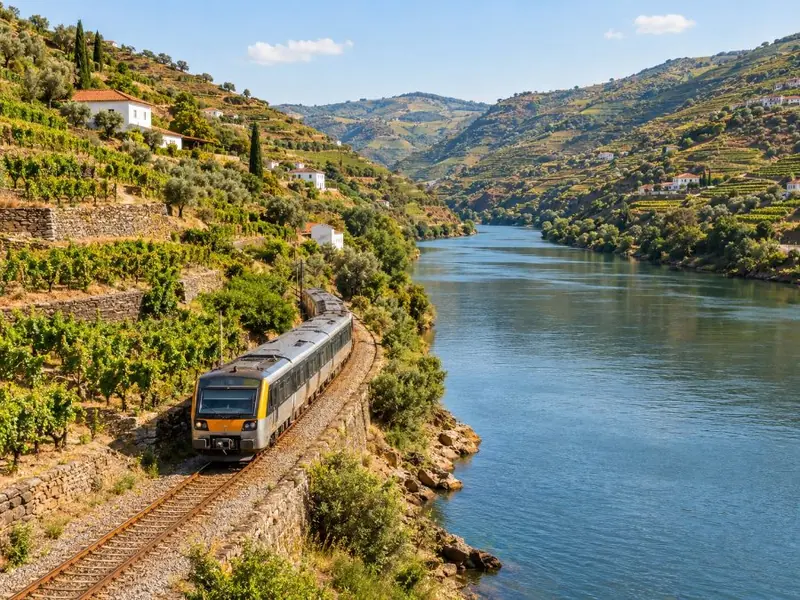
Boat, Train & Lunch Day in the Douro
A short ride on the Douro line, plus boat and lunch